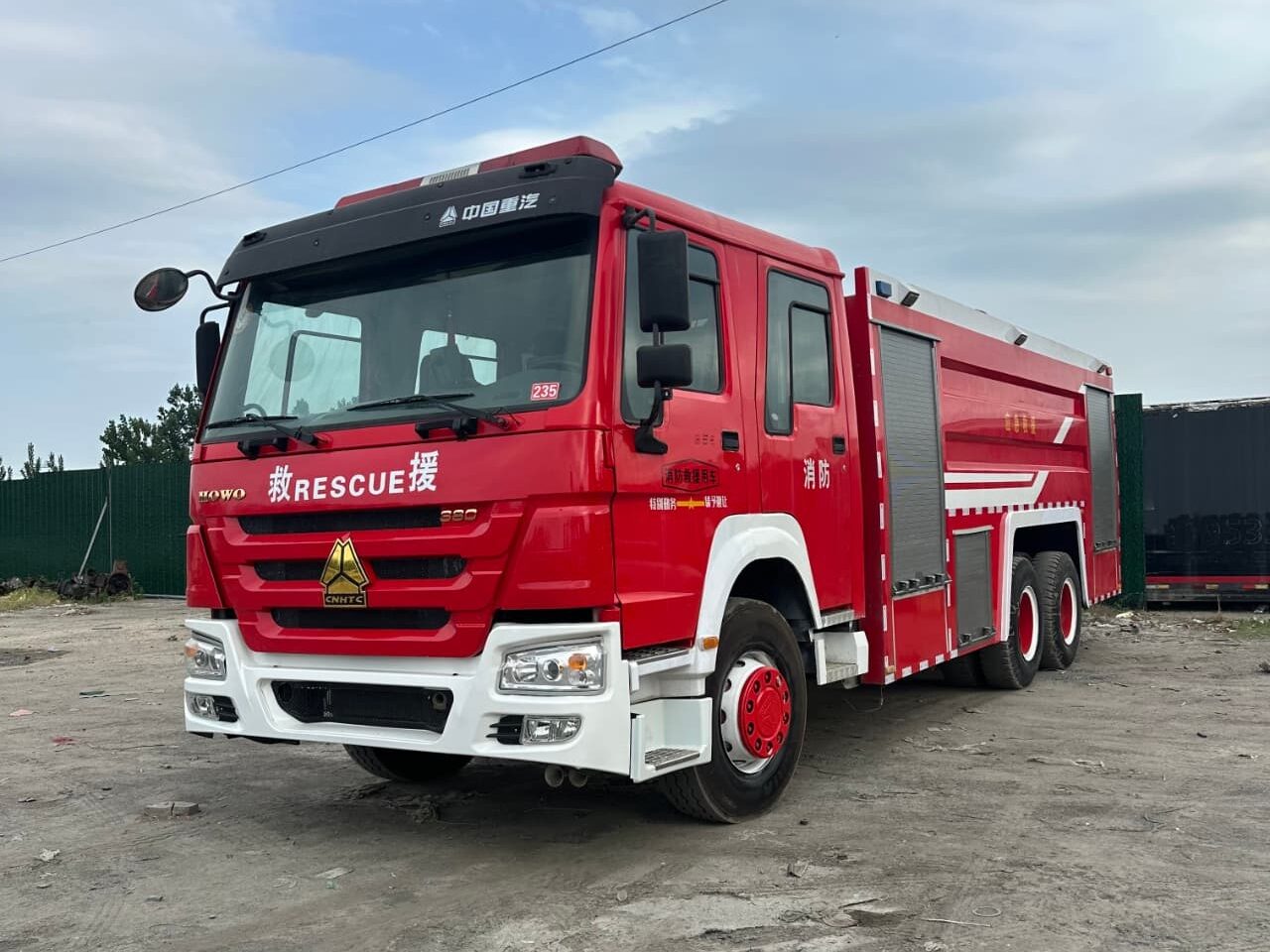
Selecting the right fire truck chassis is one of the most important decisions when purchasing a firefighting vehicle. The chassis directly affects payload capacity, maneuverability, operating costs, and emergency response efficiency. Among the most common configurations, 4×2 fire truck chassis, 6×4 fire truck chassis, and 8×4 fire truck chassis each serve different operational requirements. Understanding their differences can help buyers make the best investment.
Understanding Fire Truck Chassis Configurations
The first number indicates the total number of wheel positions, while the second number represents the number of driven wheels.
- 4×2: Four wheel positions, two driven wheels.
- 6×4: Six wheel positions, four driven wheels.
- 8×4: Eight wheel positions, four driven wheels.
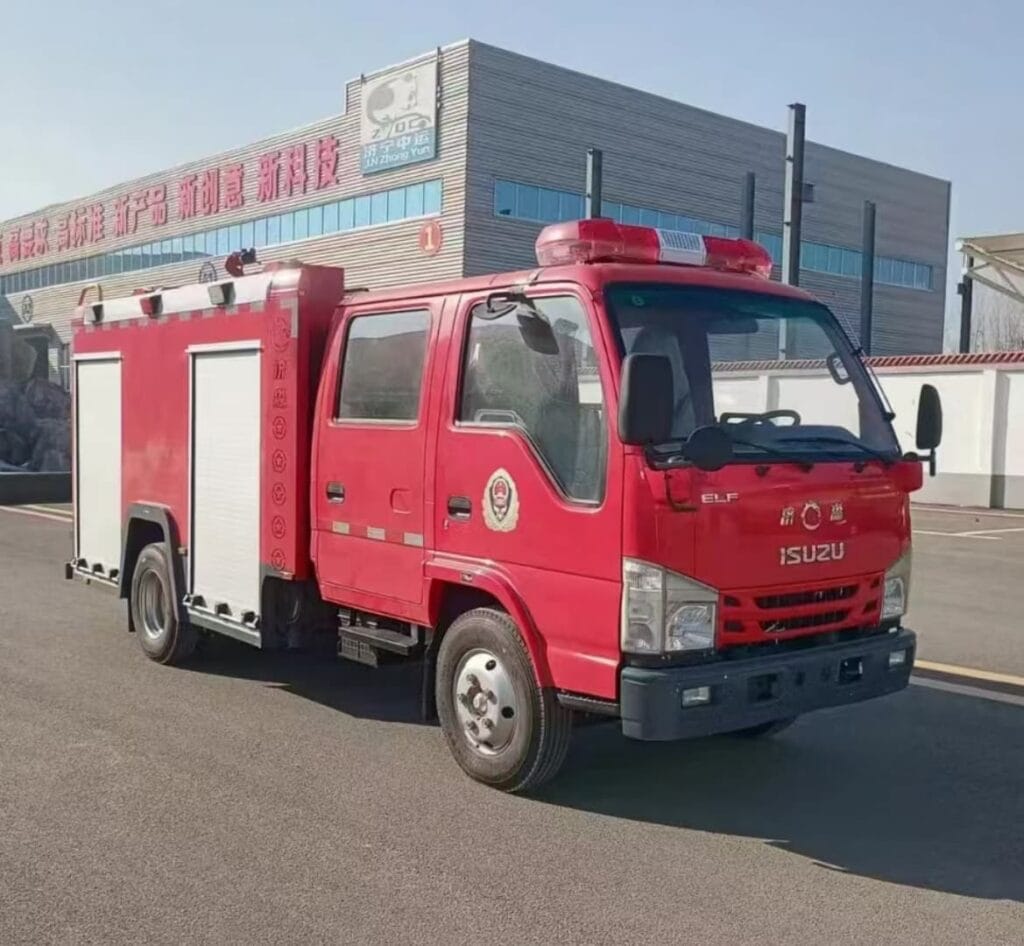
4×2 Fire Truck Chassis
A 4×2 fire truck is ideal for urban firefighting operations and municipal fire departments.
Advantages:
- Lower purchase cost
- Better fuel efficiency
- Easier maneuverability in narrow streets
- Lower maintenance expenses
Typical Applications:
- Water tank fire trucks
- Quick response fire engines
- Small foam fire trucks
Recommended Tank Capacity:
- 3,000L to 8,000L
For cities and towns with good road conditions, a 4×2 fire truck offers an economical and practical solution.
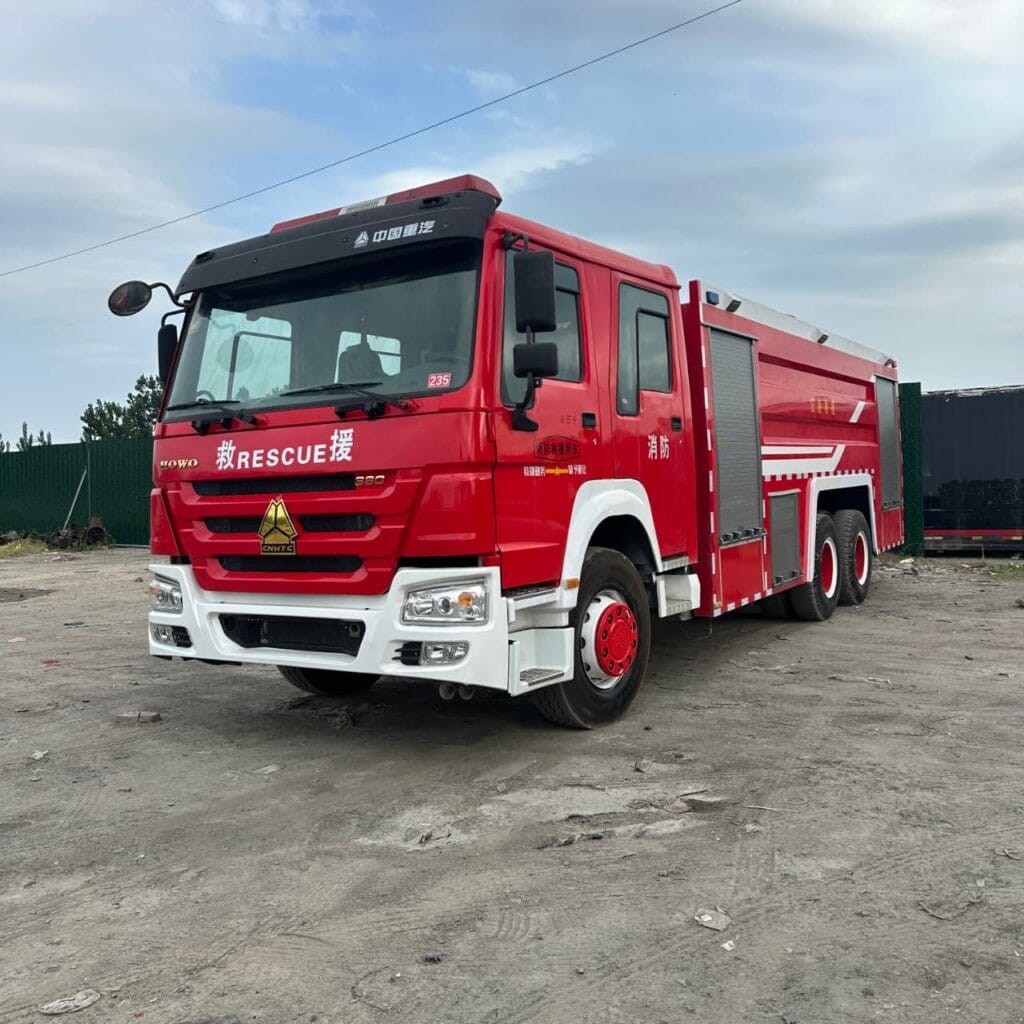
6×4 Fire Truck Chassis
A 6×4 fire truck chassis is the most popular choice in Africa, the Middle East, and Southeast Asia.
Advantages:
- Higher payload capacity
- Better traction on rough roads
- Suitable for long-distance operations
- Excellent balance between cost and performance
Typical Applications:
- Water and foam fire trucks
- Industrial fire trucks
- Airport support vehicles
Recommended Tank Capacity:
- 8,000L to 15,000L
For most government agencies and industrial customers, the 6×4 fire truck provides the best combination of carrying capacity and operational flexibility.
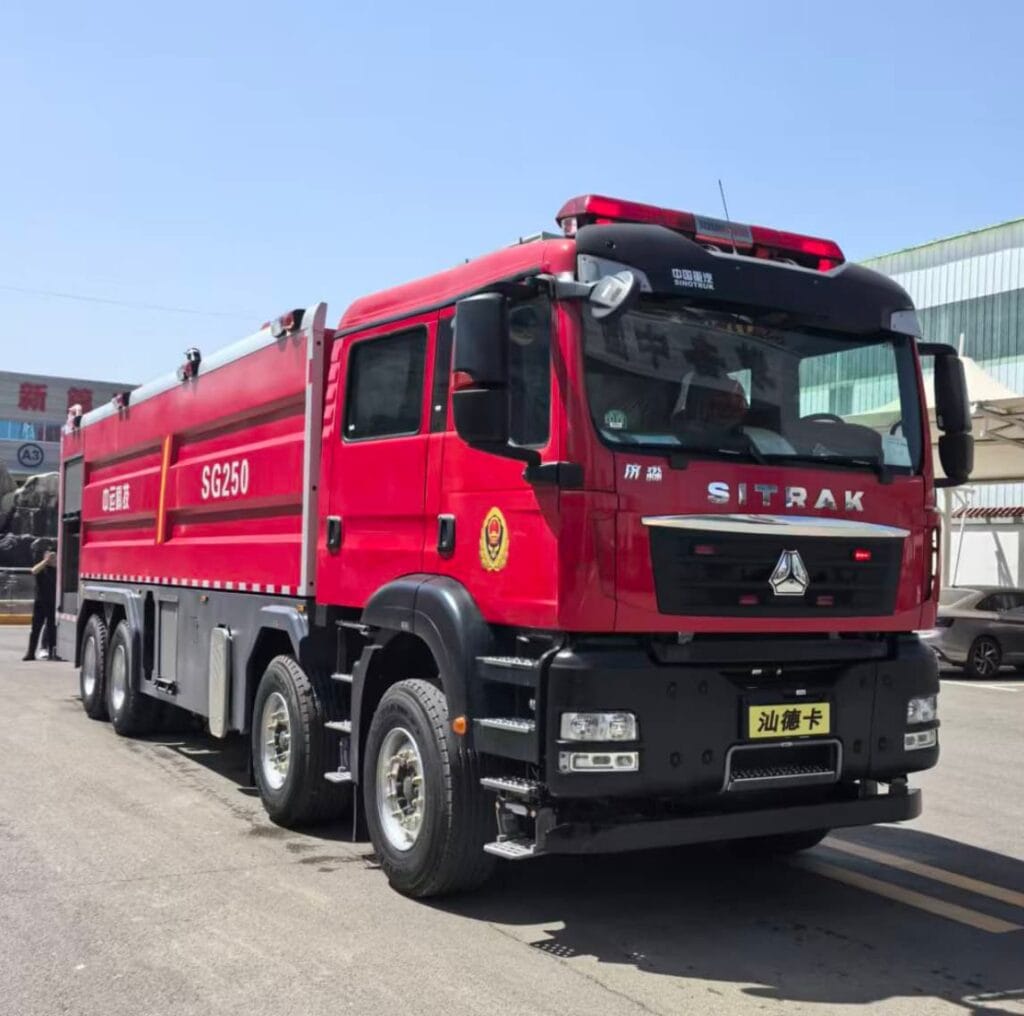
8×4 Fire Truck Chassis
An 8×4 fire truck is designed for heavy-duty firefighting missions requiring maximum water and foam capacity.
Advantages:
- Largest payload capacity
- Suitable for large industrial facilities
- Extended operating time without refilling
- Excellent stability under heavy loads
Typical Applications:
- Airport crash tenders
- Petrochemical fire trucks
- Large municipal firefighting vehicles
Recommended Tank Capacity:
- 15,000L to 25,000L+
Conclusion
Choosing between a 4×2, 6×4, or 8×4 fire truck chassis depends on your operational environment, water capacity requirements, and budget. For urban firefighting, a 4×2 chassis is often sufficient. For most municipal and industrial projects, a 6×4 chassis offers the best value. When maximum firefighting capacity is required, an 8×4 fire truck is the preferred solution.
By selecting the right chassis configuration, fire departments and emergency service providers can improve response efficiency while maximizing long-term investment value.
FAQ
Q1: Which fire truck chassis is most popular in Africa?
The 6×4 fire truck chassis is the most popular because it offers excellent payload capacity, durability, and performance on challenging road conditions.
Q2: What is the best chassis for municipal firefighting?
A 4×2 fire truck is typically ideal for urban and municipal firefighting due to its maneuverability and lower operating costs.
Q3: How much water can an 8×4 fire truck carry?
Depending on the design, an 8×4 fire truck can carry between 15,000 and 25,000 liters of water or more.
Q4: Is a 6×4 fire truck suitable for industrial fire protection?
Yes. The 6×4 chassis is widely used for industrial, mining, oilfield, and petrochemical firefighting applications.
Q5: Which chassis configuration offers the best value?
For most buyers, the 6×4 fire truck chassis provides the best balance of cost, payload capacity, and operational performance.